Arctic winter conditions are rapidly changing, with increasingly frequent mild weather periods where rain is followed by ground ice on the tundra. Plants become encapsulated in ice for extended periods, which can damage them and is expected to result in a lower "greenness" index measured via remote sensing.
Ground ice covering the tundra in Svalbard has become common in recent decades. Photo: Åshild Ønvik Pedersen / NP
By combining field-based time series from the COAT program on the occurrence of so-called "ground ice" and summer temperatures with satellite-based indices for the growing season (NDVI) during the period 2013–2023, it was found that the greenness index is lower in locations with ground ice in higher-altitude terrain.
The timing of maximum greenness occurred earlier in areas with ground ice in one of the regions, Brøggerhalvøya. The thickness of the ground ice had no impact on the results; only the presence of ice was associated with the tundra's greenness. Summer temperatures showed no correlation with tundra greenness during this time period.
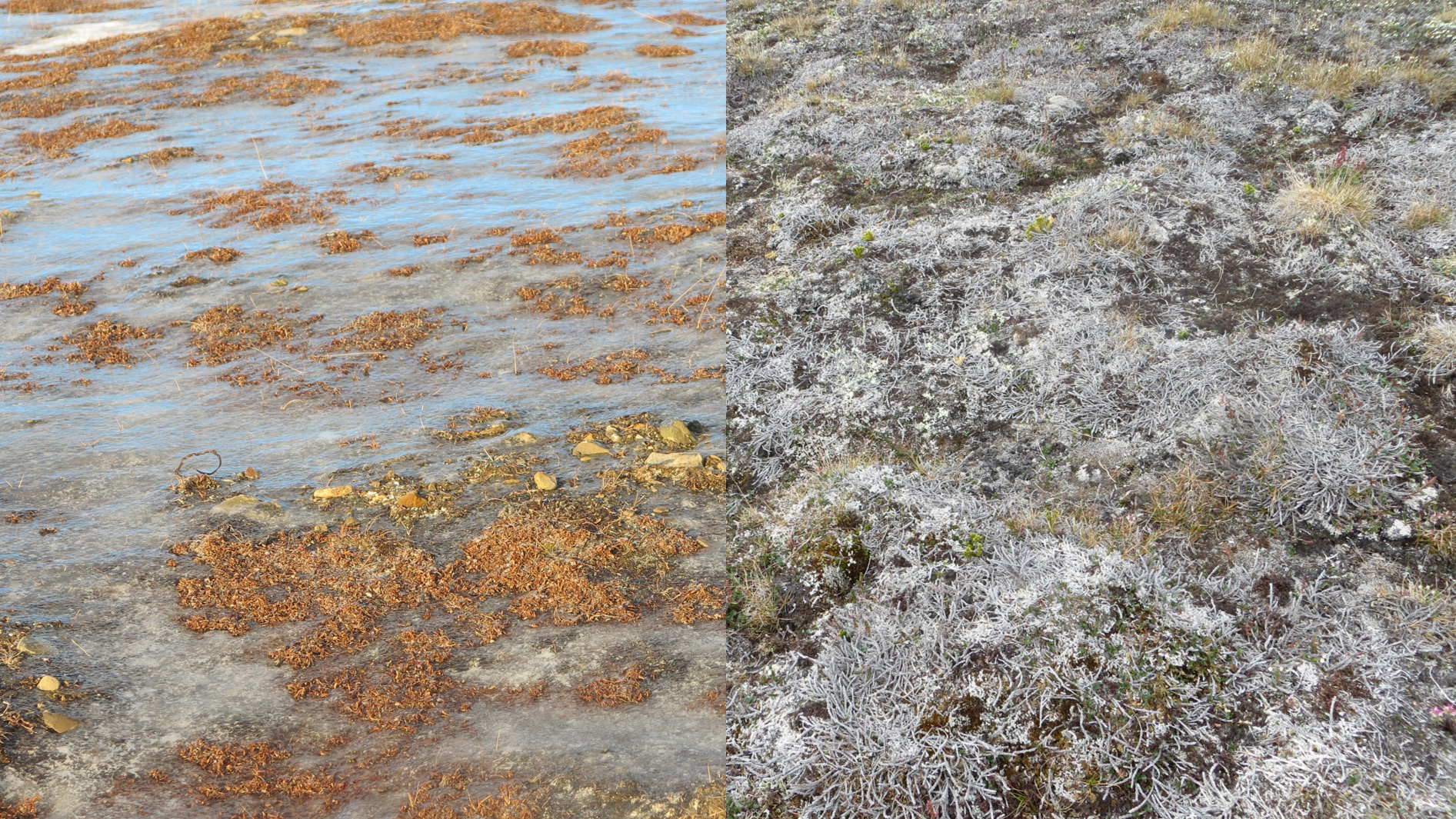
Plants can be damaged by being encapsulated in ice during winter, which can also be detected from satellite images in high altitude parts of the landscape. Photo: Virve Ravolainen / NP and Åshild Ønvik Pedersen / NP
Mild winters with frequent rain on snow events and ground ice are becoming more common each year and may, soon, alter the tundra's greenness across larger parts of the landscape, not just at higher altitudes. This could, in the future, have consequences for the entire food web that depends on the vegetation. The study also highlights the importance of using a combination of long-term field-based time series to interpret results from satellite remote sensing.
Full paper